
When December rolls around, it’s the season of giving, kids send letters to Santa, parents buy the gifts they can, and friends partake in secret Santas or white elephant parties. Over time, the season of giving has morphed into the season of overconsumption. The generally agreed-upon definition of overconsumption is this: A situation where purchasers or consumers purchase an unsustainable amount of goods, services, and resources and cannot replenish them.
Overconsumption is not new to anybody living here in America in the 21st century; we constantly see media of shopping hauls, new products, and advertisements disguised by influencers. Due to the constant overconsumption of working-class people, big businesses continue to profit while consumers and working-class customers go broke. The latest trend spurring overconsumption into action is the Ralph Lauren Christmas Trend. If you’re unfamiliar, Ralph Lauren is a designer brand known for manufacturing old-money, classical, traditional items.
Christmas Trends
For years now, tacky Christmas has been out; tacky Christmas is what you might see in ’90s movies or how your parents may have decorated when you were a kid. However, in the past decade, each year brings a new Christmas aesthetic where there is a color scheme or type of decorations to use.
Ralph Lauren is a luxury brand that has been around since 1967. The general theme is tradition. Most of what they sell will remind you of traditional rich families you may see in movies, the ones that attend the country clubs on Saturdays. Ralph Lauren mainly focuses on clothing apparel, footwear, and home decor. One of their most viral products this year is the Ralph Lauren Bear Sweater, which is a navy-blue cable knit sweater with a teddy bear on it.
This is nothing new or phenomenal; however, consumers desire it because it reminds them of wealthy, classy individuals or families. They sell footwear consisting of loafers, pumps, and kitten heels, all known for having a very classical style. Home decoration follows suit with classical pieces such as a cashmere throw blanket or throw pillows, silver picture frames, and 100% silver, silverware. This Christmas, Ralph Lauren has been promoting their version of Christmas: a return to tradition. This return to traditional Christmas embodies what I can only describe as the McCallister house (Home Alone), with rich colors and over-the-top decorations, with the quality only the top one percent can afford.
The media has recently become obsessed with portraying wealth and putting people who don’t have that wealth or simply don’t portray it down. With the rise of these kinds of trends, it has inspired people to buy more to conform to these norms. These trends and rises of consumption are harmful on their own, but when you couple them with the Christmas season, it gets treacherous for people’s bank accounts. People have already seen price increases on rent, grocery bills, and overseas purchases, now in addition to current trends flooding the media almost every month. People cannot keep up.
Big Businesses
The trickle-down effect was originally coined by humorist Will Rogers in 1932 to mock President Herbert Hoover’s policies during the Great Depression, suggesting benefits to the rich would “trickle down” to the poor, but it gained widespread use and notoriety as a pejorative for supply-side economics under President Reagan in the 1980s. The trickle-down effect I’m talking about now is how working-class people get influenced to buy products they don’t need to benefit big companies. The simple explanation is through influencers. Big businesses can pay big and small-time influencers to promote an idea or aesthetic that will inherently benefit them.
Ralph Lauren Christmas is just the most recent example, by labeling and a vibe or aesthetic after a brand, everything helps that brand. For example, the sweater from Ralph Lauren that went viral soon after directly benefited them. However, most of Ralph Lauren’s benefits are from indirect actions. Most consumers are not buying directly from Ralph Lauren. However, consumers may be buying from brands like L’Oréal, Kohl’s, or Designers Guild.
You see, Ralph Lauren has licensed out their name. This means these brands can sell products with Ralph Lauren’s name, logo, or anything else to promote Ralph Lauren. By doing this, Ralph Lauren takes a share of these products sold under their name, so when a consumer buys a product with Ralph Lauren’s logo on it, that purchase will still indirectly benefit Ralph Lauren.
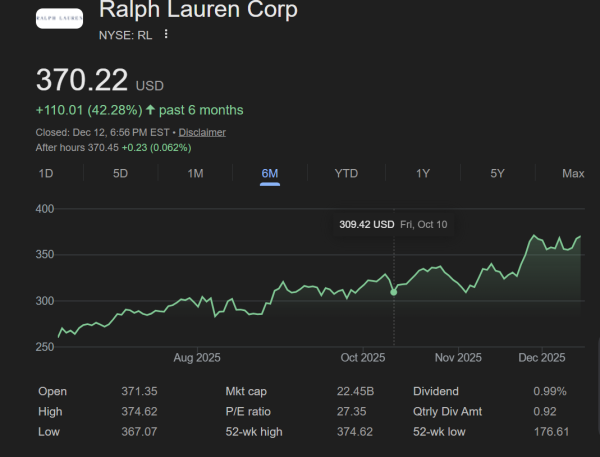
As you can see from the chart above, over the last six months, Ralph Lauren’s stock has increased by 42.28%. This illustrates how a trend that is directly and indirectly connected to them has benefited them. The very first spike in Ralph Lauren’s stock value was on August 22nd, when videos of Ralph Lauren Christmas started popping up on platforms like TikTok and Instagram, posted by influencers paid to do so. The second spike was on November 20th, right before Thanksgiving.
These spikes show us how the company benefited right after the trend started and how it continued to benefit them. I suspect that after Christmas is over, the stocks will plateau and Ralph Lauren will continue to profit after this trend, while people go into debt paying back their dues. People go into credit card debt every year around the holiday season, according to Cornerstone Community Federal Credit Union.
The two ways people go into credit card debt during the holidays are through credit utilization and missed or overdue payments. Generally, people aren’t supposed to spend more than 30% of their available credit. However, most people exceed this. Exceeding more than 30% hurts your credit card score. Most lenders (like banks) look for around 10-20% by exceeding this, the spender brings up their percentage, making it more difficult to get loans for important things like houses, business investments, and more. Missed or past due payments can damage your finances even more.
You see, when the consumer overspends on holiday purchases, this increases interest rates, making it incredibly difficult to pay it back. In addition, if the consumer uses multiple credit cards, that means several different interest rates on several different cards, racking up bills quicker than can be paid back.
Result
The result of Christmas overconsumption is consumers going into debt and working-class people supporting big businesses that don’t care about their customers. Following these kinds of trends with a spending, not saving, attitude will only lead to over consumption, materialistic values, and pollution on the planet that’s already in danger. The solution is to simply go back to regular consumption, curating ornaments over the course of many years overall, having patience, and not attempting to buy all of the Christmas decorations all at the same time. By doing this, you also create memories associated with each ornament or decoration.
The problem is complex, but the solution is simple: consume less. Now, consuming less is no small task when consumers have been exposed to such a high level of consumption labeled as normal; however, here are some friendly suggestions for what to do instead. One big thing in my family has always been arts and crafts. We have countless ornaments that were made by someone in the family. Ornaments are one of the easiest crafts to make. Some ways to make them can be to fuse beads, origami, or small wood paintings with a string loop to hang on the Christmas tree.
One of my favorite decorations we do on occasion at my house is paint objects we gathered from nature. My family has collected pinecones, bark, or branches to paint or attach charms to with string to create a glass bowl of painted nature. Overall, most craft projects take less than ten dollars and can be made with things lying around the house; all you need is some creativity and some time.
In addition to the obvious benefit, making these decorations with your family provides you with quality family time, not based around consumption. One of the big fundamentals of Christmas is spending time with the people you love. This can be friends and family, and you can do a multitude of activities with your loved ones during the holidays as well. You can go to craft markets, thrift for presents, do a Christmas movie marathon, and get everyone together.
Every year, when Christmas rolls around, people should not be thinking about credit card debt or how many Jellycats they’ll get; the general public should be focused on giving thoughtful gifts to the ones they love and spending time with the ones they love.