
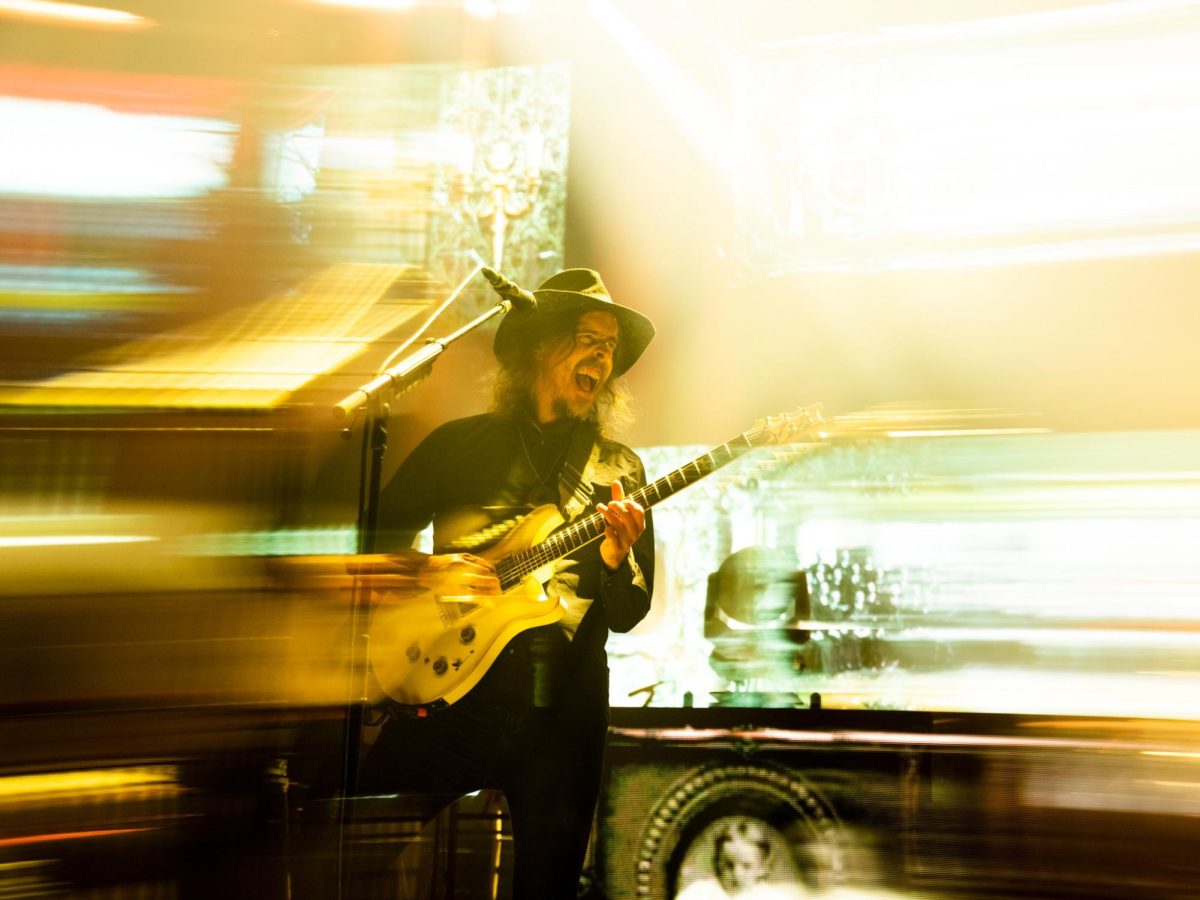
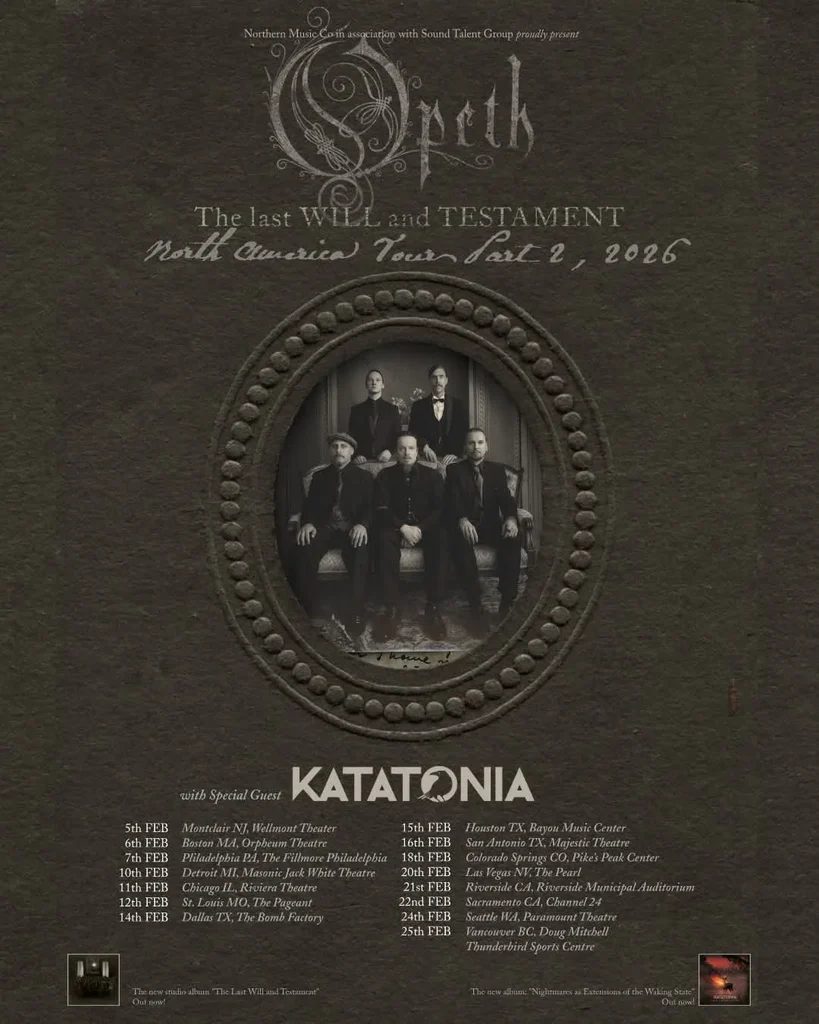
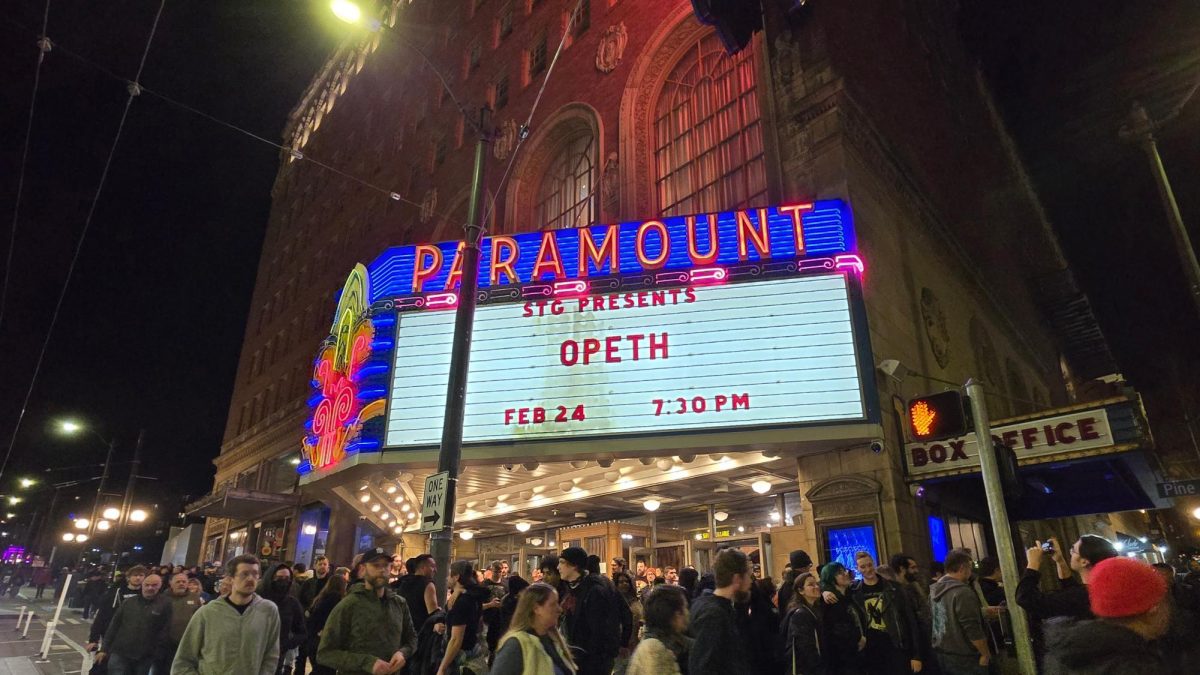
On the 24th of February, 2026, Swedish progressive metal icons Opeth performed at the historic Paramount Theatre in Seattle, WA. It was the penultimate show of the second leg of the North American tour supporting their latest studio album, The Last Will and Testament (2024).
Seattle is not an unfamiliar city to Opeth. They first performed in the Emerald City at Graceland (now known as El Corazón) on April 29, 2003. The Showbox hosted another amazing show that same year, on August 3, featuring a rare performance of “To Bid You Farewell.” The following year saw the band come back to Graceland during their Lamentations Over America tour and play the opener from the iconic Still Life (1999) record, “The Moor,” for the very first time.
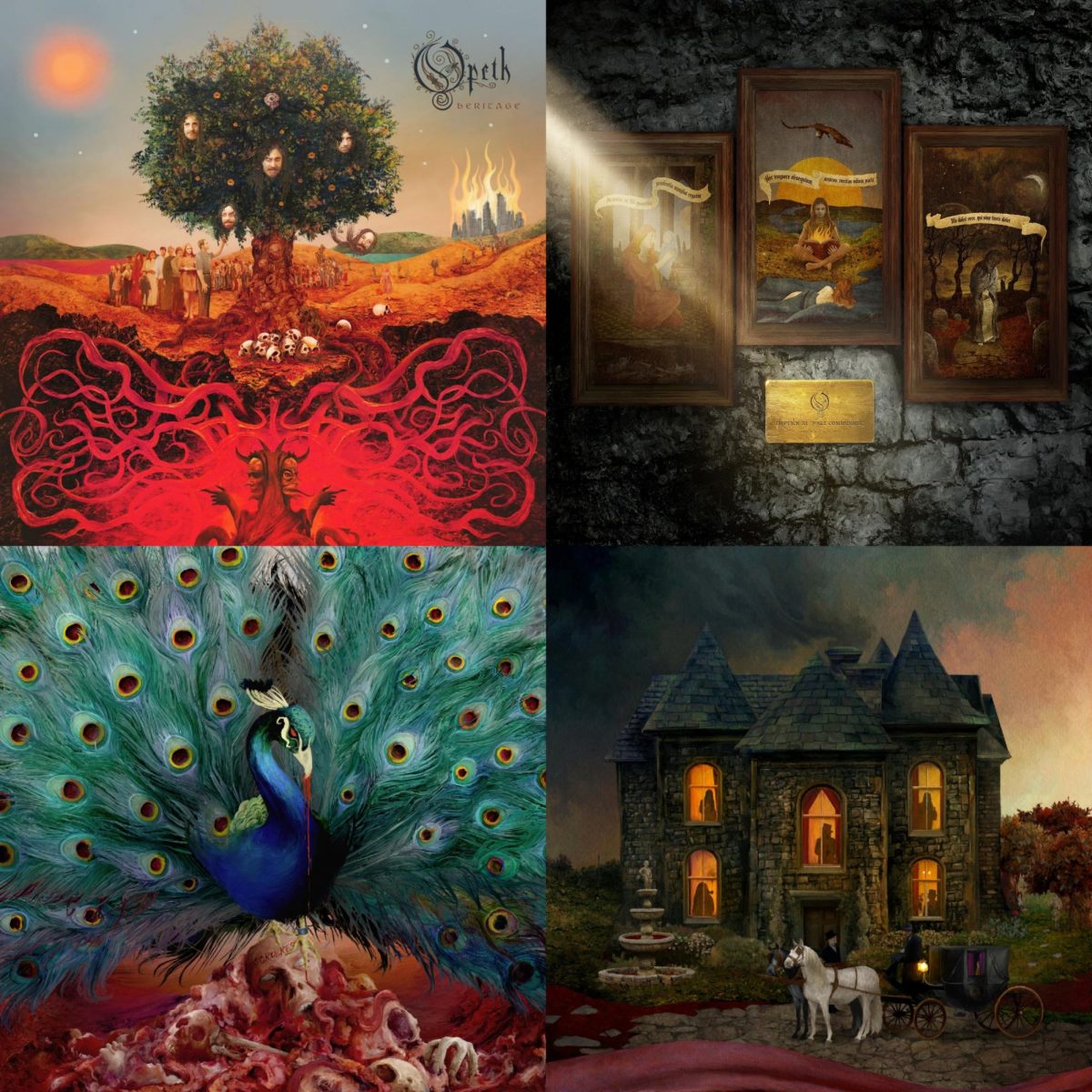
But this year’s North American stop at the Paramount was particularly special. After three studio releases following the divisive Heritage (2011), which marked a shift from their signature progressive death metal style to a more 70s-influenced, progressive rock sound, it seemed that the iconic death metal growls of band leader Mikael Åkerfeldt were to be restricted only to live performances of old material for the rest of the band’s career.
That was the case until the release of Opeth’s fourteenth studio album, The Last Will and Testament (2024). It marked the longest wait between studio releases (five years since In Cauda Venenum), the first release with Waltteri Väyrynen on drums, the first concept album since Still Life (1999), and the return of harsh vocals in the studio in 16 years. It is an amazing album that bridges the stylistic choices of “Oldpeth” and “Newpeth” exceptionally well. Naturally, fans were especially excited to see them live to promote the new material and showcase old classics.
On this tour, fellow Swedish heavy metal act Katatonia was set to open for Opeth for 15 dates while continuing their own North American tour. To the dismay of Seattleites, the band’s tour bus broke down in Eugene, OR, leaving them unable to make the gig in time. It was an unfortunate turn of events. Although I have been an Opeth fan for nearly two years now, I had never heard of Katatonia before purchasing tickets. I had been slowly making my way through their discography for the past two months or so, and I was looking forward to seeing them live.
$170 for my first show at the Paramount Theatre netted me two tickets on the second mezzanine of the balcony. With Katatonia out of the picture, Opeth were scheduled to appear at 20:00. The Seattle audience enjoyed the music of hard rock legends Scorpions for about an hour. In an Ola Englund interview, frontman Mikael Åkerfeldt mentioned that one of his guitar heroes is Matthias Jabs, longtime Scorpions guitarist. I recall hearing the entire Blackout (1982) record and the first few songs from Fly to the Rainbow (1974) over the PA before the gig, and I wasn’t surprised at all.
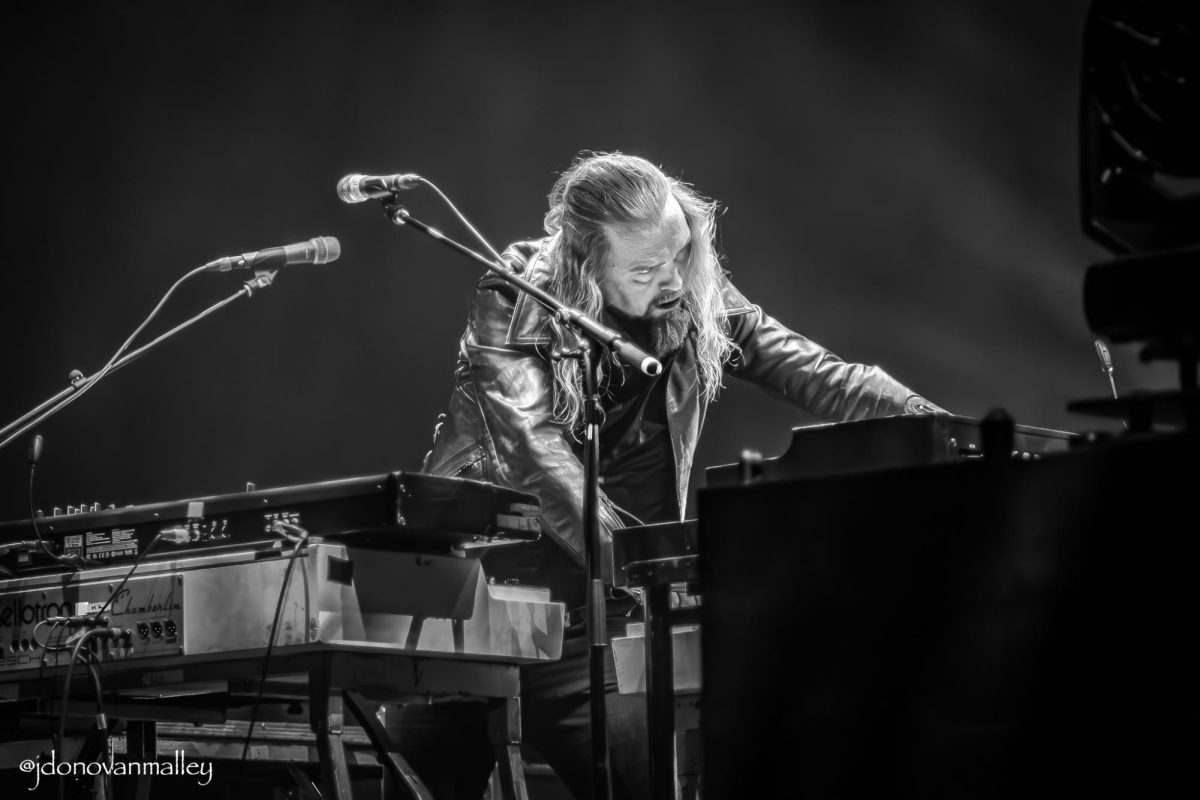
Lineup changes for Opeth aren’t strange. Even Åkerfeldt, who is the de facto leader and songwriter who has appeared on every studio album, isn’t technically an original member! The most recent change came from the drum stool. Following the departure of longtime drummer Martin Axenrot, the band initially enlisted Sami Karppinen as a live show replacement from 2021 to 2022 before ultimately choosing Waltteri Väyrynen as their permanent member.
Rounding out the lineup were bassist Martin Mendez (the second-longest serving member since 1997), guitarist Fredrik Åkesson (since 2007), and keyboardist Joakim Svalberg (since 2011). I was especially looking forward to seeing how the Finn would perform live. Of course, I had looked him up and watched several clips of him live beforehand, but nothing could’ve prepared me for the sonic battery he and Opeth had in place for me that night.
“§1,” The Last Will and Testament (2024)

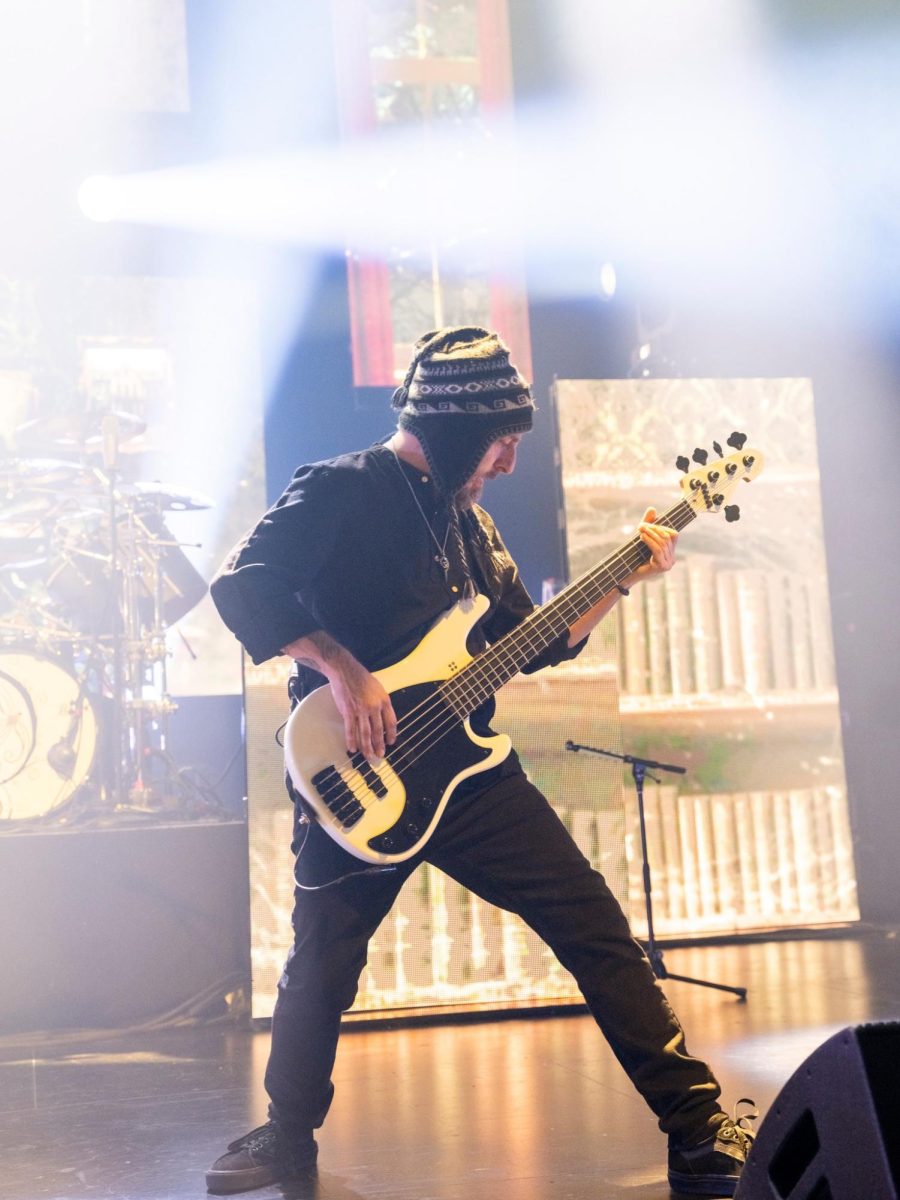
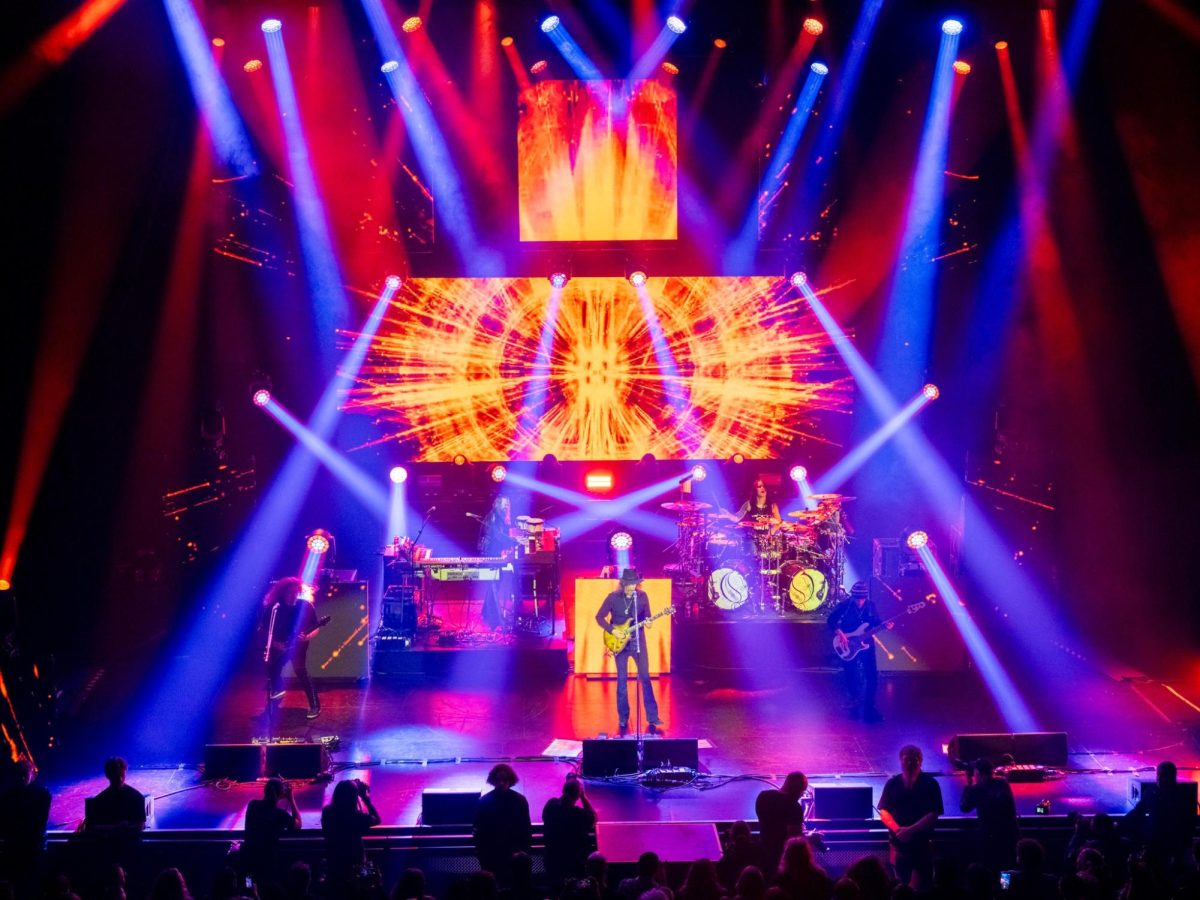
Almost exactly at 20:00, the lights dimmed, and the eerie walk-on “Seven Bowls” by Aphrodite’s Child started playing. The haunting voiceover set the mood exceptionally well, and as the band members came out, the audience roared in excitement. The somewhat lacking stage production consisted of the band members’ wardrobes (Åkerfeldt donning his Ritchie Blackmore-inspired black hat and Mendez wearing his trusty Andean chullo hat), multiple background screens, and, most importantly, the blinding light shows.
The drop-D-tuned “§1” makes it both an amazing album opener and a concert opener. Released as the first single from the new album on August 1, 2024, and debuted live on the first leg of the North American tour in Milwaukee, WI, on the 11th of October that year, it has been the opening song since. While I would have loved another clean vocal “Progpeth” album, The Last Will and Testament basically delivers exactly that (just with the welcome return of growls), and it’s easy to see why older fans are embracing it.
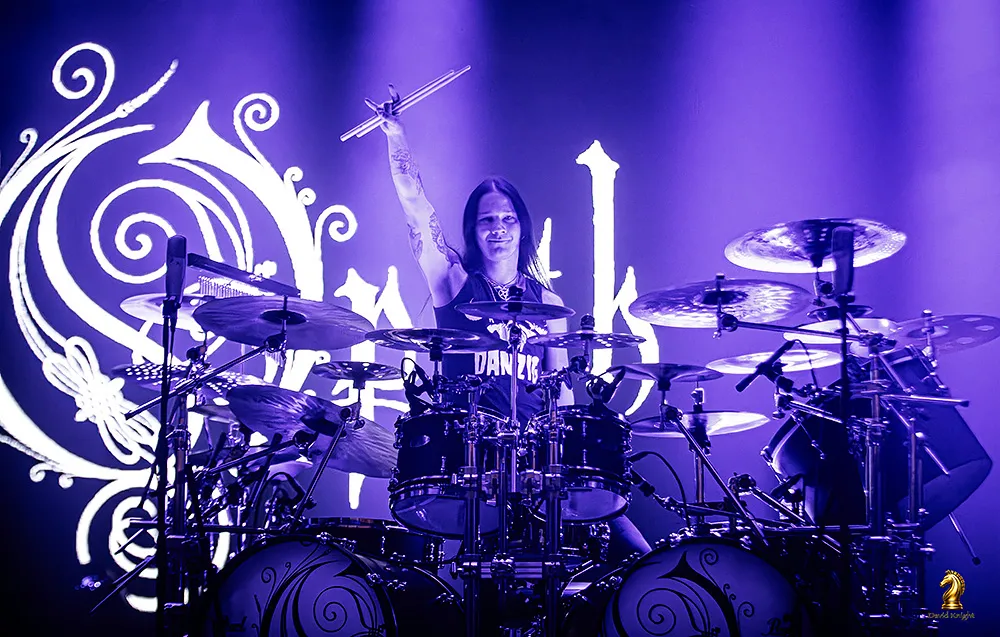
I’ll try not to wax lyrical about Walt’s immense skills during every song. His playing was easily the best drumming display I’ve ever seen live. He thundered throughout the show with an elegance that only virtuosos who have thousands of hours of practice under their belt possess. The only minor complaint I have is that they didn’t perform the beautiful orchestral arrangement at the end. I think Svalberg could’ve easily pulled out some Mellotron settings on his keyboards (as he does on later tracks), but I digress.
“Master’s Apprentices,” Deliverance (2002)
Following the “radio edit” performance of “§1,” the audience was treated to a nine-and-a-half-minute barn-burner. After a brief doomy keyboard interlude from Svalberg (which essentially replaces the outro of “§1”), “Master’s Apprentices” kicked in with one of Opeth’s heaviest opening riffs. The sound mix gradually improved as the set progressed, but the muddy mix swirling with distorted guitars and booming double bass was a once-in-a-lifetime experience for me.
Åkesson changed the original “feedback” guitar solo before the acoustic section in favor of some tastefully performed tapping. The death growls and muted riff right after the acoustic interlude caught me off guard with its speed and aggression. And nothing could have prepared me for those red lasers and Walt’s explosive fills that were going off for the last few minutes of “Master’s Apprentices.”
Väyrynen recently uploaded drum cam footage of this song’s performance in Seattle on YouTube. In the description of the video, he says, “It’s been one of my favorite tracks to perform live ever since we added it to the set and it’s kind of my “comfort zone” song – the one where I can sort of ‘relax’ a little after the hectic start of the set (‘Paragraph 1’), play straight 4/4 for the majority of the song and just have fun with it.”
In my opinion, Deliverance (2002) is an album that has three decent tracks (“Wreath,” “For Absent Friends,” and “By the Pain I See in Others”), and three clear-cut, absolute genre classics (the title track, “Master’s Apprentices,” and “A Fair Judgment”). After a one-off performance of the track on April 2nd, 2017, in San Jose, Costa Rica, I’m glad they brought back this Deliverance gem for the first European leg (February 2025) and beyond; it was long overdue. I’m grateful I got to see two of those three insurmountable tracks live; hopefully, I can catch “A Fair Judgment” in the future!
“Godhead’s Lament,” Still Life (1999)
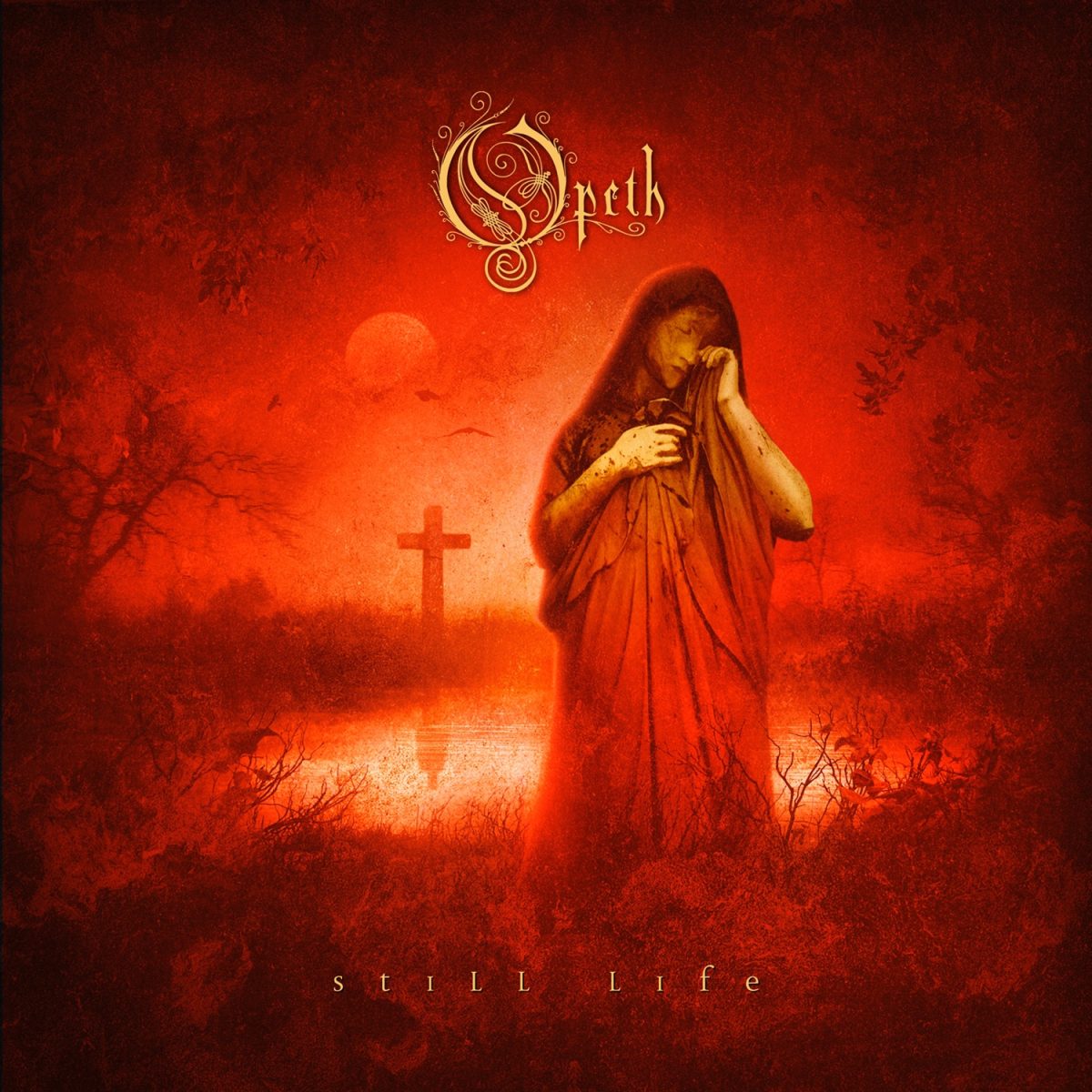
Still Life (1999). What a record. My deep-seated fixation on Opeth began with “The Moor,” which was the very first song I ever listened to by the Swedes. The death metal classic that follows the iconic opener is none other than “Godhead’s Lament.” Imagine my surprise on the 5th of February when I saw that they’d performed the song live in Montclair, NJ! I would’ve been more than happy to see “The Leper Affinity,” the classic from Blackwater Park (2001), which was swapped out in favor of “Godhead’s Lament,” but witnessing a tune that hadn’t been played for nearly ten years until this North American tour (July 2, 2016, Barcelona, Spain) was equally as exciting.
As expected, the band delivered a stellar performance, albeit with some minor hiccups. After another short interlude from Svalberg, the intro riff kicked in with a ferocity I can’t quite describe. Waltteri Väyrynen posted his drum cam performance of the Still Life classic on YouTube, and I couldn’t believe how effortlessly he executed the intense and thunderous drum parts.
After Mikael’s excellent guttural growls, the audience was treated to an alternate solo, or so I thought. I was under the impression he had composed a new “Godhead’s Lament” solo for this tour, but this was incorrect. As I was listening to older bootlegs, he’s been playing the solo with the bend on the 17th fret since at least 2003.
Moving on to the minor, more technical issues. There is a magnificent, clean arpeggio part following the second chorus that features a layered, atmospheric distorted guitar line. It could have been the venue’s sound system, but Åkesson’s distorted tone drowned out Åkerfeldt’s acoustic work during this sequence, making it almost impossible to hear.
Furthermore, Fredrik was forced to change his guitar right in the middle of the breathtaking acoustic section where he and Joakim provided beautiful vocal harmonies alongside Mikael. Having grown so accustomed to the four-piece studio version, I found that the additional keyboard swells only elevated an already epic composition to even greater heights. What a grand way to start the concert!
“§7,” The Last Will and Testament (2024)
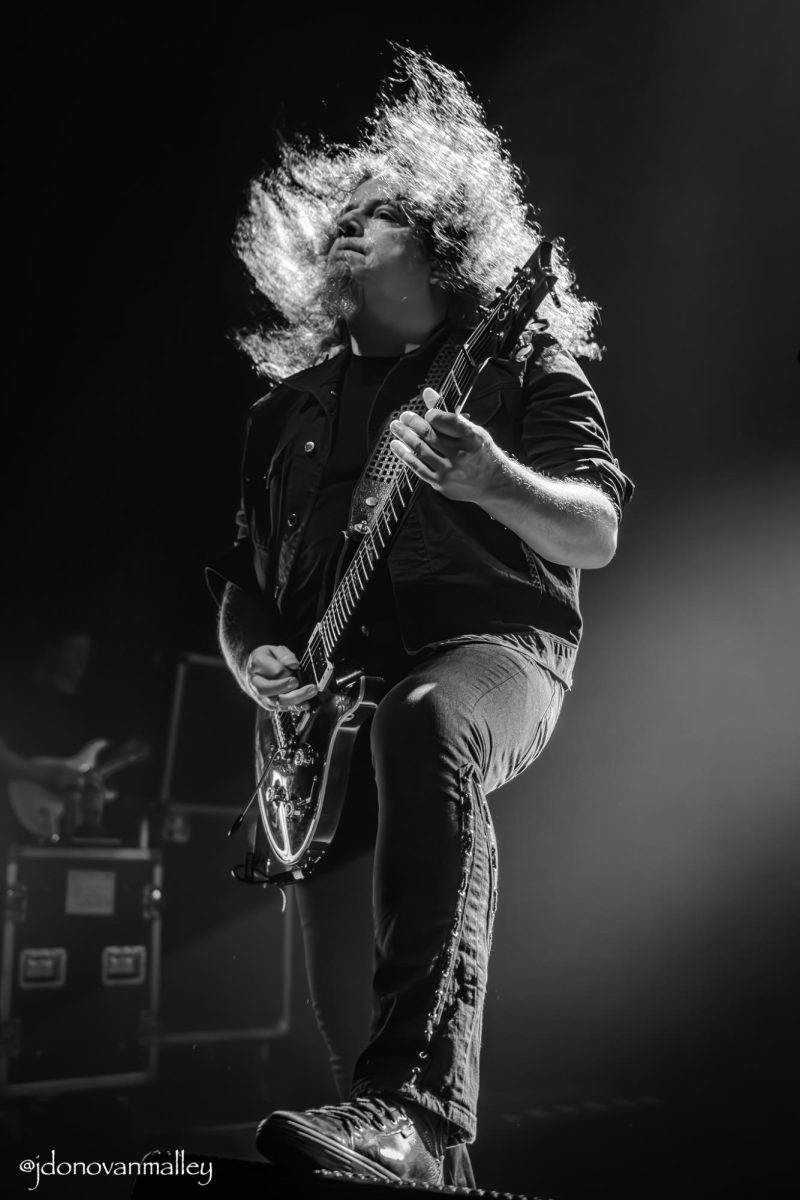
After three immense tracks (and a “Hello, motherf–kers!” from Åkerfeldt), both the band and the audience took a breather and were treated to the first of many of Mikael’s famous stage banter.
“We’re called Opeth. We come from Sweden—it’s out there, next to Austria. And we had a band with us from Sweden called Katatonia; they’re not f–king here, are they? Might be my fault, because Jonas (Renske, Katatonia frontman) and I had dinner last night, and I kind of slipped him a mickey. They’re too good. So, we’re the only entertainment tonight. We’ll play some songs; there’s still going to be some entertainment going on, of sorts. You see the screens, the beautiful surroundings; you can look at the walls if it’s boring.”
“But we’d prefer for you to look at us, because we need that attention, because we’re f–king divas, and we need to feel loved from Seattle. And, this is also our last show in the U.S. for some time. And if somebody gets what they want, we’re going into the 51st state tomorrow (cue audience boos and laughter). I think I can say that now without being deported.”
“We have a newish record out called The Last Will and Testament. We’re going to play a couple of songs from there. ‘Songs’—they’re not really songs; they’re just exercises in… s–t. We like them; I like s–t, what can I say? This might be difficult to dance to; I’m not sure if you would do that anyway, we’re not playing a f–king Bee Gees track. But before we do, I want tonight to be, for all of us, amazing. I want you guys not to be shy and just kind of move to the music however you want. We’re going to continue with a track from the latest album; this one is called ‘§7’.”
After such a great run of songs, I found that this was the only underwhelming section of the concert. I think the main reason it seemed that way is that it was sandwiched between four incredible classics. It also didn’t help that the Ian Anderson narration didn’t synchronize with the lyrics displayed on the fiery screen. I personally think it is the weakest song from the latest album. If they’d played “§2” or “§6” instead, tracks that are much more complex, and were probably why they ultimately decided against playing them, I think the setlist would’ve been even better. A fine song on its own (Åkerfeldt’s growls, in particular, were impeccable), it just seemed to dampen the incredible pace the band was on.
“The Devil’s Orchard,” Heritage (2011)
Now, the “mellow” section of the concert. By this point, I hadn’t realized how moody and dark the song choices were for the current North American setlist. Even though Opeth had abandoned death-metal growls after Watershed (2008), their tenth studio album, Heritage (2011), is probably the darkest and most sinister they have released. It always surprises me when I see album rankings online, and it’s dead last on most of them. After talking about how fans reacted when the “progressive rock” record was released, the band jumped into said record’s first single, “The Devil’s Orchard.”
While I have long been familiar with this track, I had never actually seen its music video before this concert, and the accompanying psychedelic visuals were a nice touch. Åkerfeldt’s clean vocal delivery on this piece was flawless, and he even surprised the audience by incorporating a growl! The “God is dead” refrain is a surprisingly effective crowd-engager, which probably explains the song’s enduring presence in their setlists (since its debut in 2011, it has only been omitted in 2020).
I must say, the song is much heavier live compared to the studio version. There’s an extra intensity that kicks the song into overdrive, and I highly suspect drummer Waltteri had a big part in doing so. As I watched various Opeth sets over the past decade or so, I can see why many fans are kind of tired of them performing this track in particular. There are so many other noteworthy songs from Heritage or any of the post-2011 albums that could be performed instead. Maybe “Folklore,” “Voice of Treason,” or “Lovelorn Crime”? Nevertheless, I love “The Devil’s Orchard,” and it was a treat to hear it (or for that matter, any Opeth song) live.
“To Rid the Disease,” Damnation (2003)
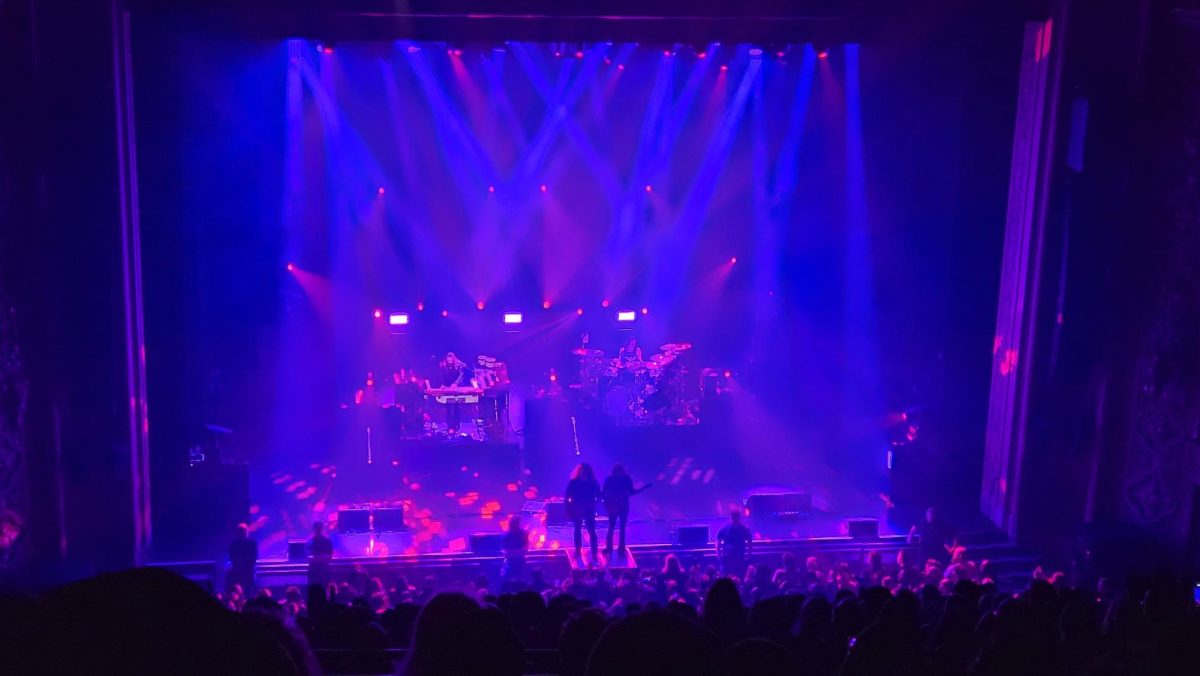
If you’ve never listened to Opeth before, Damnation (2003), is probably the best place to start. As the brooding, melancholic sister album to the heavy, unrelenting Deliverance (2002), it features some all-time great tracks. One of those is “To Rid the Disease,” and I’m incredibly glad it made the setlist. I think this song, in particular, perfectly captured the essence of Opeth’s trademark “sorrow” music. The interplay of clean guitars and sorrowful lyrics, combined with the Paramount’s historic architecture and cinematic feel, created a unique and immersive atmosphere.
A major highlight was seeing the two guitarists stand side-by-side at the front of the stage, bathed in a dark magenta light display. I didn’t expect Åkesson to take over the haunting, “I have lost all trust I had in you” vocal lines, but I’m sure glad he did. Martin Mendez didn’t play a single note out of place on bass; in fact, I think the bassline during the verse might be my favorite Mendez contribution. And Joakim Svalberg’s excellent keyboard work flawlessly recreated the somber ’70s progressive rock vibe, with excellent musicianship all around.
All that being said, I still find the studio version vastly superior, a critique I wouldn’t apply to the rest of the night’s setlist. Maybe it’s the magic of Steven Wilson’s production, or Åkerfeldt’s multi-layered emotional vocals, but there’s just something special about the original that couldn’t be replicated live.
And it’s not my favorite song from Damnation, far from it! I would’ve preferred to see the extended version of “Closure,” the epic crowd sing-along “In My Time of Need,” or even the tender “Hope Leaves” with the amazing live outro solo by Åkesson. Nitpicking at its finest, I’m just happy I was at the Paramount that night!
“§3,” The Last Will and Testament (2024)
Before diving back into the heavier material, Åkerfeldt shared a hilarious story about being in a record store and hearing an incredible Turkish soul-jazz album that inspired one of his new song intros. He went on and on about how amazing the record was, building up this great musical reverence. When the venue got a little quiet, someone in the crowd clearly shouted, “Did you buy the record?” Without missing a beat, Mikael just deadpanned, “No.” It’s hard to capture in writing, but his dry comedic timing was absolutely perfect.
The song he was leading into was “§3” from their latest album. Åkerfeldt previously described this track on Apple Music, saying, “This is more of a classic heavy metal song, I would say. The opening was inspired by a theme you often hear in jazz music, like Django Reinhardt, but also some classical music and fusion-rock bands. And the musical Chess, believe it or not, which was written by Benny and Björn from ABBA. From there, it kind of becomes a normal heavy metal song, but with more emotions than your basic Iron Maiden song. I’m not saying Iron Maiden doesn’t have emotions, but this is kind of a sad song—to me at least. Lyrically, there’s some explanation about infidelity that happened and what that led to.”
Seeing it performed live was a treat. It was fascinating to watch Mikael manually adjust his low E string right before the heavy “Apostasy” section of the song. He quickly down-tuned the string to B to achieve that crushing 0-1-0-1 sound, only to almost immediately tune the guitar back into standard tuning once the section concluded. The second single released from The Last Will and Testament is a great song on its own, don’t get me wrong, but it still doesn’t hold a candle to the upcoming compositions of “Oldpeth.”
“Demon of the Fall,” My Arms, Your Hearse (1998)
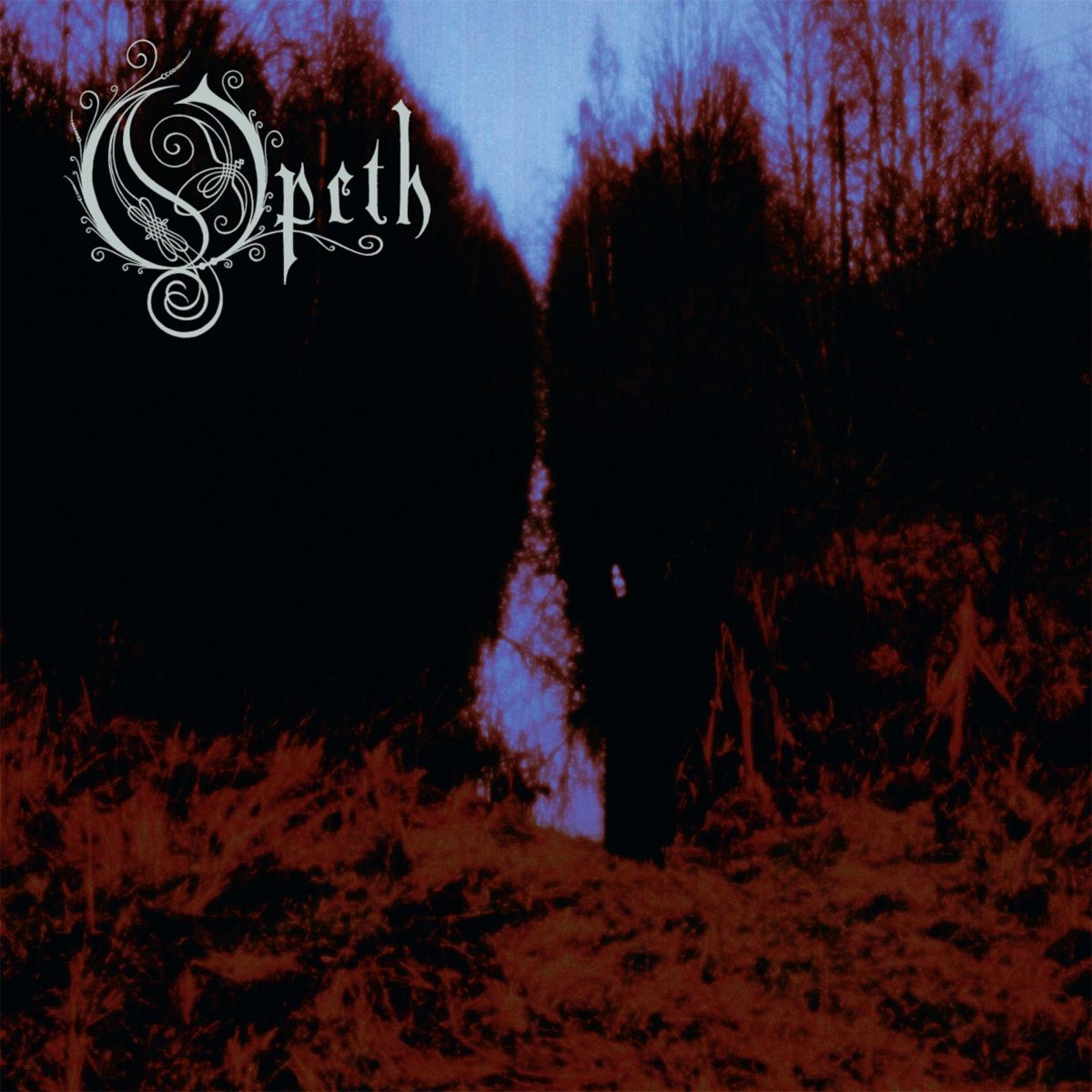
“I remember the guy who formed Opeth, David (Isberg), back in the day, we were teenagers hanging out, drinking beer, trying to find a girlfriend, and listening to metal. So he came over with three records, and on the same day, I heard these three records. Metallica’s Metallica (1991), Nirvana’s Nevermind (1991), and what I think was my favorite that night, Alice in Chains (enormous applause from the audience). They have remained one of my favorite bands of all time. Dirt (1992) was the first CD I ever bought. I was quite late with CDs, but what a f–king record that is, Jesus Christ.”
“Anyways, talking about all these legendary, great f–king bands, and we’re going to jump into one of our shitty songs, sorry about that (audience laughter). This is something that you can move to in the more traditional death metal way, do you know what I’m talking about? I know there are a few of you out there who want to do the whole moshpit, crowdsurfing s–t. That’s what we want to see: we want to be entertained up here, and we’re going to provide the music. From the My Arms, Your Hearse (1998) record, “Demon of the Fall.”
After that short speech, the band jumped into one of their most beloved songs of the 90s. Even on a nearly 30-year-old track, the band found ways to keep it interesting. I didn’t expect to hear pinch harmonics at the tail end of the iconic opening riff at all, and it added so much to the live performance.
Navigating the track’s relentless tempo changes and punishing double-kick sections, Walterri proved exactly why he’s the drummer of Opeth. Simply outstanding! The dissonance of the drop-D-tuned guitars, combined with a surprisingly concise arrangement (for a 90s Opeth song), makes it an undeniable crowd favorite. Åkerfeldt delivered some truly amazing growls; and for me, it was easily his most impressive vocal execution of the entire night.
The audience clapped along with Fredrik as Mikael started playing the signature acoustic riff, and I absolutely adore those brilliant short acoustic interludes that build to ferocious death metal movements. I actually felt chills down my spine as Åkerfeldt sang the “Run away, run away” verse. The booming PA system and Joakim Svalberg’s keyboard swells added a massive richness compared to the original studio version. I didn’t quite grasp what emotion the background visuals of gliding through mountains were supposed to convey. They aren’t key to the overall story of the concept album, so perhaps the visual team simply thought soaring over peaks like a ghost looked cool. Regardless, it hardly detracted from a flawless performance.
“The Grand Conjuration,” Ghost Reveries (2005)
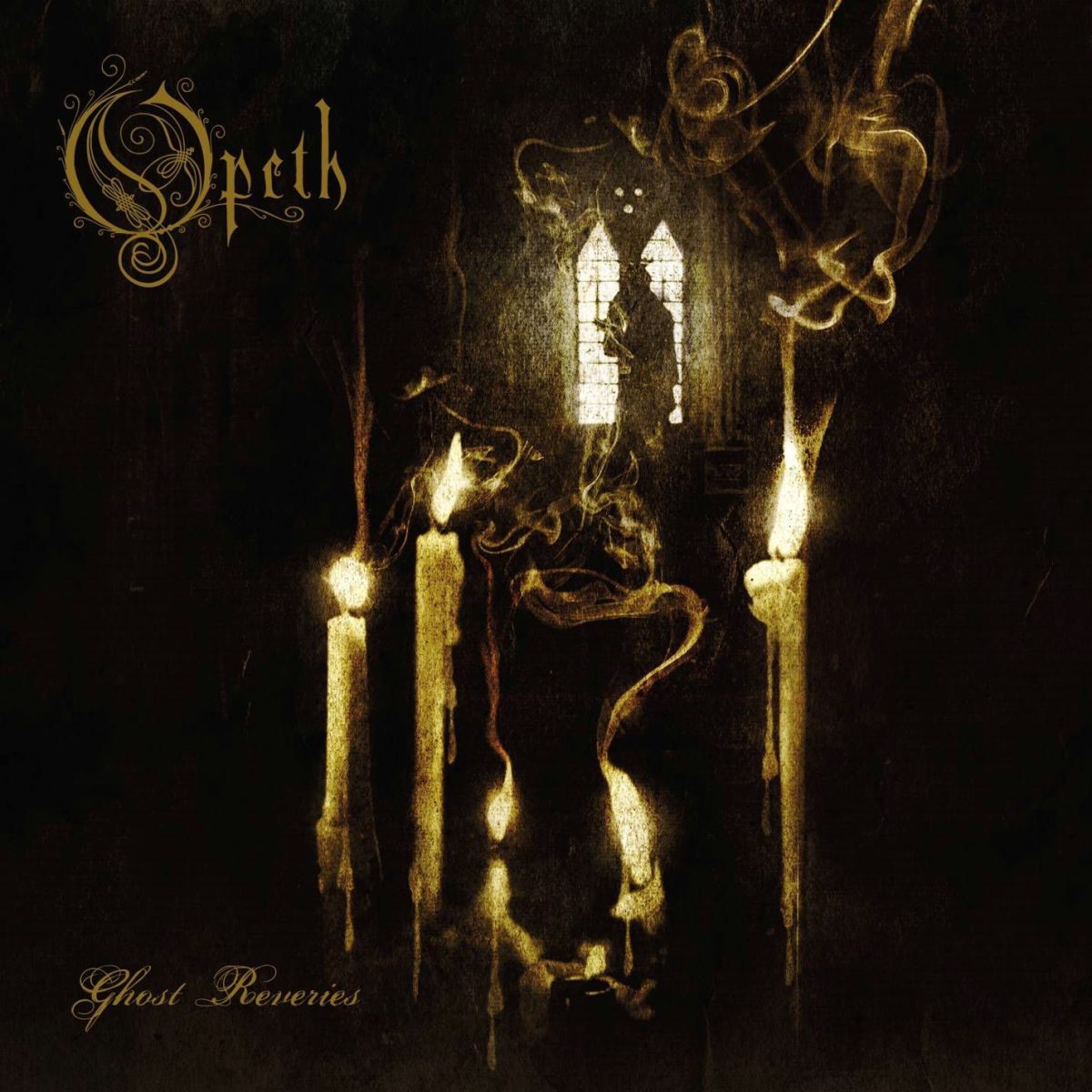
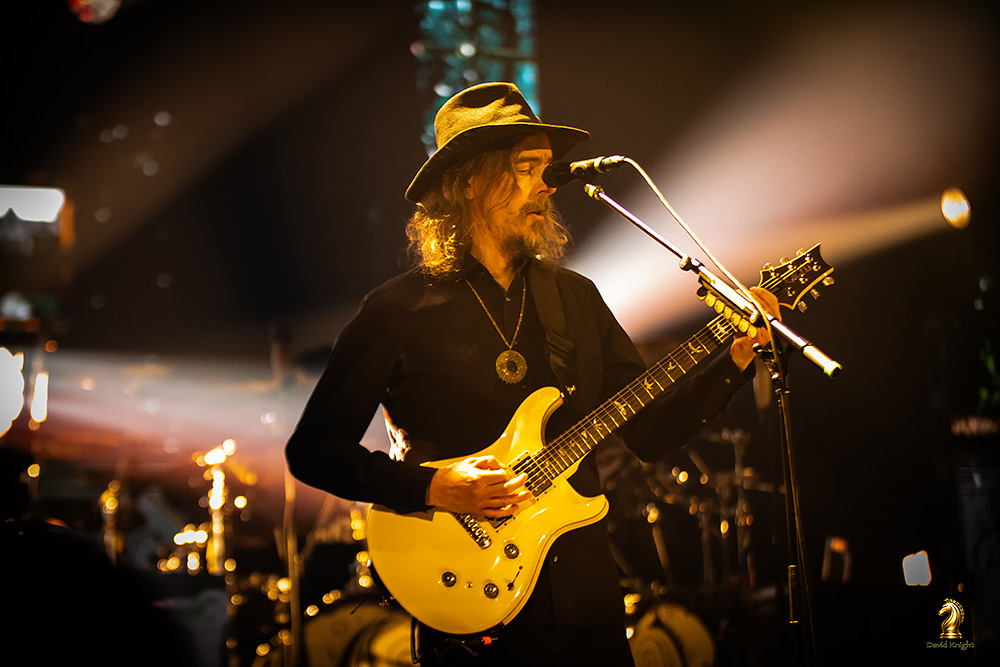
Diehard Opeth fans know exactly what it means when Åkerfeldt straps on his signature green PRS guitar. As soon as it made an appearance, the anticipation in the room spiked. Ghost Reveries (2005) is my personal favorite Opeth record, and experiencing “The Grand Conjuration” live was easily the most epic moment of the night. The sinister atmosphere that captivated the audience after “Demon of the Fall” was astounding.
While it is arguably the most straightforward composition compared to the other Ghost Reveries epics, standing alongside titans like “Ghost of Perdition,” “The Baying of the Hounds,” and “Harlequin Forest,” it carries a massive, brooding weight that commands any venue. As a massive fan of the studio version, I loved the slightly altered live arrangement of the introduction, instead of simply repeating the main theme. Åkerfeldt opted to strum the strings above the nut, aggressively shaking the tremolo arm to summon a haunting, ethereal feedback that echoed through the Paramount.
I listened closely for Åkesson’s spooky fingerpicking section during the verses, but it was completely absent. After later checking footage from other stops on the current North American leg, he seems to play it every night. It might have been a deliberate omission for the Seattle crowd, or a casualty of the venue’s PA system swallowing that specific frequency, who knows. “The Grand Conjuration” has such an evil and doomy middle section, how can you not love it? The rhythmic groove of the outro, combined with the high-intensity strobe lights, was absolutely hypnotizing. 10/10 composition, 10/10 performance by the band.
“The Drapery Falls,” Blackwater Park (2001)
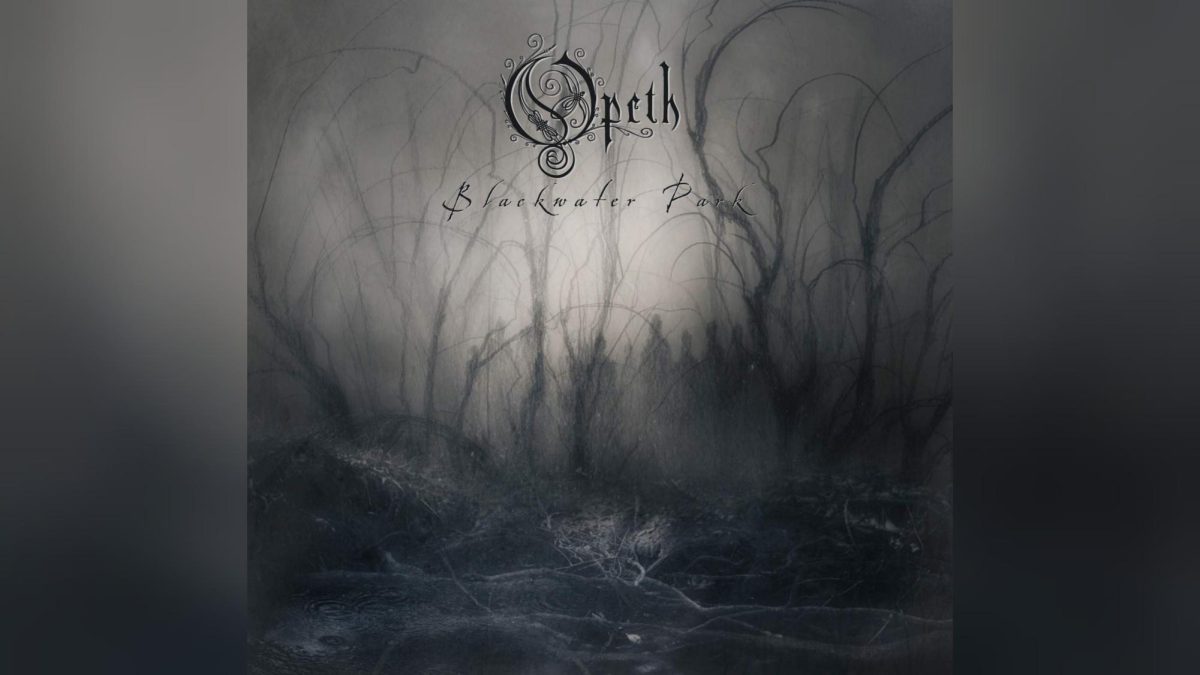
We’ve finally arrived at the end of the night (or so it would seem). I understand why the band chose to replace “Ghost of Perdition” as the set closer with “The Drapery Falls.” The legendary Blackwater Park (2001) record is turning 25 this year, and what better way to celebrate it than by playing a fan-favorite and possibly the quintessential Opeth song? They’ve already played the entirety of Blackwater Park during their 2010 Evolution XX: An Opeth Anthology tour, and with a new album to promote, that just wasn’t going to happen. So I’m incredibly grateful the single from their (arguable) magnum opus was performed on this North American leg.
The band’s background was set to a midnight blue light show, with flashes of lightning and brooding clouds entrancing the Paramount audience. “The Drapery Falls” is the band’s third most performed song, and for good reason. From its captivating acoustic riffs, exquisite lyrics, vocal delivery (both clean and distorted), and that repeating theme, “The Drapery Falls” is an undisputable masterpiece. It is one of the only 10-minute-plus Opeth songs I know how to play in its entirety, and boy, was it fun to see the two guitarists up on stage playing the iconic parts.
Right after the impeccable performance and the band saying good night (before coming back for the inevitable encore), I felt like I should’ve recorded the entire gig. But that made me think: doesn’t that defeat the whole purpose of experiencing your favorite band perform live? Of course, I would love to have every last minute of the concert readily available on my phone, but that just isn’t worth trading for the energy you get from a live show. Staring at a screen entirely defeats the purpose of being enveloped by that massive wall of sound. I’m happy with my short clips and sweet pictures, and opting to keep my phone in my pocket for the majority of the concert meant I could actually be present & fully immersed in the moment instead of viewing it through a lens. But I did kind of regret that once Opeth came back on stage.
Snippets of “Windowpane” & “Bleak”
After the Blackwater Park classic, I was ready to see the band come back to the stage and perform the customary encore. Opeth (specifically Mikael) has a way of both frustrating and pleasing audiences by playing song teasers in between the rehearsed songs. This past North American leg has been no exception. In Montclair, NJ, just before “§3,” Mikael teased both “Serenity Painted Death” and “Face of Melinda.” He also played a riff from “Black Rose Immortal” before the usual encore, “Deliverance” in Colorado Springs, CO.
Throughout the show, because of the unfortunate incident with Katatonia, I was hoping for an extra song or two to be thrown into the set to please the Seattle audience. As I knew what their setlist looked like for the Japanese leg in 2025, I half-expected them to play either “The Leper Affinity,” “In My Time of Need,” or “Ghost of Perdition.” But I knew it was a long shot since Opeth rarely, if ever, deviates from their setlist on such short notice.
But then, Mikael started taking requests. After a minute or so of listening to the fans, Åkerfeldt beckoned bassist Martin Mendez over to barre the second fret, and lo and behold, the Seattle audience was treated to the intro riff of “Windowpane.” I freaked out as I hadn’t seen any clips of them teasing the song on this North American tour, but the two musicians promptly stopped. Åkerfeldt then said:
“How are we going to do that? I regret- I put on a capo when I wrote that song just because I thought it looked cool. F–king stupid. How do you play that song?” He then attempted to play the opening riff to “Windowpane” by barring the second fret with his own index finger, and I can tell you from personal experience, it is doable, but the rest of the song requires the barre.
The crowd then roared when Mikael jokingly said, “Oh s–t!” in response to a crew member bringing out capos to the band. He followed up with a remark saying, “That leaves me with my second problem with this song. I can’t remember how to play it.” And they actually started playing “Windowpane,” a song I thought I’d never hear that night. They had last performed the Damnation classic in its entirety three years ago in South America. I did not expect the full song, and sure enough, the frontman cut the performance off midway. Yet, the teasing wasn’t over just yet.
From my memory, Blackwater Park was the third Opeth album I ever listened to in full. I remember hearing that distorted guitar line segueing into that exotic, snake-like main riff of “Bleak” like it was yesterday. First performed during the European leg of the 2001-2002 Blackwater Park tour, it was a semi-regular mainstay in the setlist for a decade. It has sadly not been performed in its entirety since the European leg of the 2014-2015 world tour supporting Pale Communion (2014).
Knowing that, I thought I’d never get to see “Bleak” (in any shape or form) live, but I got that wish at my first Opeth concert! Mikael made the band stop just before the first verse, saying, “I forgot the fucking lyrics!” I still haven’t seen any footage of the snippet on the internet, which is extremely surprising. It seems to have been the only snippet of “Bleak” on this tour, which makes it all the sweeter that the Seattle crowd was treated to an excellent tease.
“Deliverance,” Deliverance (2002)
I’ve read countless comments online saying that “Deliverance” is overplayed. Since the Mean Fiddler gig in London on December 4, 2002, the song has been performed live 1,046 times as of the end of the latest North American leg, nearly 300 more than their second most performed live song (“Demon of the Fall” with 747 times). And while I agree to an extent, there’s just no way the title track of arguably their heaviest album isn’t going to be played; it almost demands to be performed every night for audiences who might not have seen it before.
After introducing the band members just before the encore, Mikael quipped, “…And the genius behind it all is me. (audience applause) I’m kidding. My name is Mikael, and I f–king love you.” With that, he launched into the palm-muted introduction set to a fiery backdrop, and “Deliverance” fully kicked in. The intricate acoustic passages of the 13-minute behemoth were beautifully set against a starry background on the screens, creating a brief, delicate calm next to the death metal passages. The dynamics of Opeth’s intricate arrangements are simply amazing, and it is evident that the Swedes are still honing their formidable artistry with every passing year.
Watching the red rays beam across the Paramount while the band performed what is perhaps the greatest outro riff of all time was a marvel to witness live. They just stood there, menacingly! I still can’t get over the fact that the mesmerizing, syncopated outro is entirely in 4/4, and yet it manages to feel so incredibly complex and off-kilter.
Apparently, there was crowd-surfing happening on the main floor, as my brother later pointed out, but I was too transfixed by the band and the blinding light show to even notice. As the band took their final bows and the audience began to leave, I was filled with thoughts of how this night was simply unforgettable, and grateful to have the opportunity to witness such a band live.
Final Thoughts
Riding the light rail home, I chatted with a few friendly metalheads about the concert. As they were all either late teens or early twenties, it was their first Opeth concert as well. And although they obviously wanted to hear their favorite songs played live, they were completely happy with the dark setlist. But a seasoned and older fan sitting beside me in the venue had this to say.
“They’re amazing. I see them every time they come to Seattle. But in recent years, the setlist hasn’t evolved as much as I hoped it would. It’s always “Deliverance,” “Sorceress,” a well-known track from Blackwater Park and Ghost Reveries, and “The Devil’s Orchard.” They are all fantastic compositions and go over well live, but toss in more gems like “Godhead’s Lament” more often, please!”
I partly understand why fans are frustrated by the lack of variety in setlists, but I also feel the need to defend the band’s choices. Opeth is, after all, a progressive metal band. That means their discography, especially their back half, is chock-full of long and incredibly complex arrangements. To already nail nearly two hours’ worth of music with fluidity and precision while not having a designated “vocalist” is impressive on its own. Add to that the logistics of coordinating the sound, lighting, special effects, and screen projection through each part of the setlist. The band and stage engineers all need to know the setlist to prevent glaring production issues.
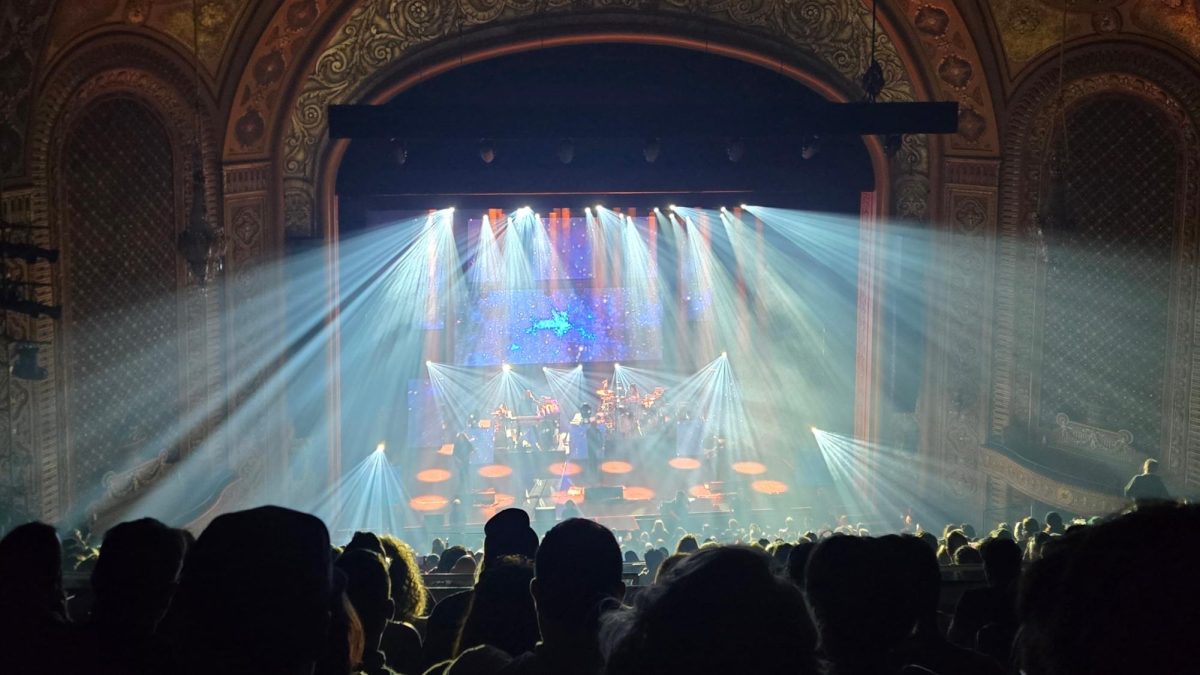
It would be entirely possible to have a few rotating songs for the frequent concert-goers. I would’ve lost my head if they had played “Hessian Peel,” “Moon Above, Sun Below,” “Harlequin Forest,” or “The Amen Corner” instead of the slightly over-played “Demon of the Fall,” and I’m saying that as someone who had never seen Opeth live before the Paramount gig! You also have to think about the “casual” fans as well.
In an era where Ticketmaster has the music industry in a chokehold, live music enthusiasts can’t justify purchasing multiple tickets and traveling across the country to see their favorite band perform different sets. Sticking with one setlist ensures every fan during that tour more or less experiences the same concert. And after all, the tour’s name is “The Last Will and Testament North American Tour Part 2.” It’s a continuation of the 2024 North American tour, and if you actually compare the two setlists, there are some big changes.
At one point during the main set, Mikael gave a shoutout to Seattle’s own, the heavy metal band Nevermore. For those who don’t know, Opeth’s very first North American tour back in 2001 was supposed to be a co-headlining run alongside Nevermore, with a scheduled stop in Seattle at the Showbox. Unforeseen visa delays left Opeth stranded in Europe, forcing them to scrap the Pacific Northwest dates entirely. Hearing Åkerfeldt acknowledge the band 25 years later felt like a fantastic, full-circle moment, and you should check out their music as well if you haven’t already!
Now, why did I say that this might be the last concert Opeth will perform? During one of the in-between song banters, Mikael mentioned that they wouldn’t be touring the States and North America for a long time. While I obviously want to see them live again, you can’t predict what can happen in the future. Although it’s highly unlikely, this show at the Paramount very well could’ve been the final show the Swedish outlet performs in the States. Not to mention Åkerfeldt expressing his growing distaste for touring in a recent interview.
In a perfect world, I see them taking the better part of 2027 off to write a new album, kick off a European and U.K. tour promoting the new album in late 2027/early 2028, and coming back to North America in late 2028 after visiting South America, Australia, and Japan. If no more tours means more studio output from Åkerfeldt, whether it be Opeth, Storm Corrosion, or even a solo album, that would be fine by me.
If you’ve never listened to Opeth before, I highly recommend Damnation (2003) as your starting point. After immersing myself in their discography over the past few months to write this review, I’ve walked away with three major conclusions. First, Waltteri Väyrynen is an absolute beast behind the kit, and I’m thrilled he’s getting the chance to shine with Opeth. Second, I need to get my hands on a PRS; the guitars looked and sounded absolutely stunning under the stage lights. And third, my appreciation for live music has grown immensely.
In an era of AI-generated content and digital screen dominance, standing/sitting in a historic theater and feeling the unadulterated weight of a real band playing real instruments was an amazing experience. Opeth delivered a masterclass in musicianship at the Paramount. Fused with Åkerfeldt’s signature humor, it was an unforgettable night of heavy metal, and I am endlessly thankful to both the band and the infectious Seattle crowd.
Opeth’s setlist at the Paramount Theatre, Seattle, WA, February 24, 2026.
“§1,” The Last Will and Testament (2024)
“Master’s Apprentices,” Deliverance (2002)
“Godhead’s Lament,” Still Life (1999)
“§7,” The Last Will and Testament (2024)
“The Devil’s Orchard,” Heritage (2011)
“To Rid the Disease,” Damnation (2003)
“§3,” The Last Will and Testament (2024)
“Demon of the Fall,” My Arms, Your Hearse (1998)
“The Grand Conjuration,” Ghost Reveries (2005)
“The Drapery Falls,” Blackwater Park (2001)
“Windowpane” (Snippet), Damnation (2003)
“Bleak” (Snippet), Blackwater Park (2001)
“Deliverance,” Deliverance (2002)
Past Opeth performances in Washington State.
April 29, 2003. A Fair Judgment Tour, Graceland (El Corazón), Seattle, WA.
August 3, 2003. Damnation Tour, Showbox Comedy and Supper Club (The Showbox), Seattle, WA.
January 24, 2004. Lamentations Over America Tour, Graceland (El Corazón), Seattle, WA.
July 25, 2005. Sounds of the Underground Tour, Qwest Field (Lumen Field), Seattle, WA.
October 15, 2005. Ghost Reveries Tour, El Corazón, Seattle, WA.
March 10, 2006. Ghost Reveries Tour, Big Easy (Knitting Factory), Spokane, WA.
May 4, 2008. Progressive Nation 2008 Tour, WAMU Theater, Seattle, WA.
May 8, 2008. Progressive Nation 2008 (Off-Date), Knitting Factory, Spokane, WA.
October 4, 2008. Watershed Tour, Showbox at the Market (The Showbox), Seattle, WA.
October 14, 2011. Heritage North America Tour 2011, Knitting Factory, Spokane, WA.
October 15, 2011. Heritage North America Tour 2011, The Showbox SoDo, Seattle, WA.
May 9, 2012. Heritage Hunter Tour, The Showbox SoDo, Seattle, WA.
October 25, 2016. Sorceress World Tour, The Moore Theatre, Seattle, WA.
May 8, 2022. North America 2022 Tour, Paramount Theatre, Seattle, WA.
February 24, 2026. The Last Will and Testament North America Tour Part 2, Paramount Theatre, Seattle, WA.